Trends
The Role of Sacred Spaces in Culture and Architecture
March 21, 2024
What are sacred spaces
Sacred spaces play an important role in culture and architecture by shaping how communities express identity, memory, belief, and belonging. Across different contexts, the design of sacred spaces influences not only the physical environment but also the emotional and cultural experience of the people who use them.
Innumerable spaces that are inaccessible to most ordinary citizens pepper our urban fabric. These spaces cater to select groups of individuals, often due to historical, cultural or religious reasons. Examples of such places include members-only clubs, private estates and sacred spaces. This makes sacred spaces an important subject within architecture, cultural design, and community focused placemaking.
Why sacred spaces matter in culture and architecture
Sacred spaces have played a pivotal role as both public and communal spaces throughout human history. In medieval Europe, churches were the central public institutions for religious, political, economic and educational activities. The churches often had shops adjacent to them as a part of a market square and the city hall. In Asia, religious spaces have always been associated with social gatherings and cultural events.
The term “sacred spaces” encompasses a variety of venues – from modest groves and natural river fronts to elaborate cathedrals and temples – areas to gather, meditate and reflect. They offer a spiritual experience as sanctuaries of calm. Sacred spaces also have shared associations with historical events. These help instil a sense of community based on ideas, beliefs, history or remembrance.
Sacred spaces play an important role in culture and architecture by shaping how communities express identity, memory, belief, and belonging. Across different contexts, the design of sacred spaces influences not only the physical environment but also the emotional and cultural experience of the people who use them.
Innumerable spaces that are inaccessible to most ordinary citizens pepper our urban fabric. These spaces cater to select groups of individuals, often due to historical, cultural or religious reasons. Examples of such places include members-only clubs, private estates and sacred spaces. This makes sacred spaces an important subject within architecture, cultural design, and community focused placemaking.
Why sacred spaces matter in culture and architecture
Sacred spaces have played a pivotal role as both public and communal spaces throughout human history. In medieval Europe, churches were the central public institutions for religious, political, economic and educational activities. The churches often had shops adjacent to them as a part of a market square and the city hall. In Asia, religious spaces have always been associated with social gatherings and cultural events.
The term “sacred spaces” encompasses a variety of venues – from modest groves and natural river fronts to elaborate cathedrals and temples – areas to gather, meditate and reflect. They offer a spiritual experience as sanctuaries of calm. Sacred spaces also have shared associations with historical events. These help instil a sense of community based on ideas, beliefs, history or remembrance.
Sacred spaces often serve more than one function. In addition to spiritual or ceremonial use, they can act as places of gathering, reflection, continuity, and shared cultural memory. Their design can strengthen identity and deepen the relationship between people and place.
Despite the historical precedent of openness, there are significant challenges today in opening sacred spaces to the public:-
1. Religious and Cultural Sensitivity: These are spaces of immense spiritual importance. The religious community may object to the opening if they feel doing so would diminish or undermine the venue’s sacredness.
2. Preservation of Spirituality: There needs to be a balance between public access and the preservation of spiritual sanctity. The space should remain true to its core purpose.
3. Balancing Public Access with Conservation: Many sacred spaces are historical and architectural marvels. Public access should not compromise the integrity of the structures.
Several successful examples illustrate how sacred spaces can be engaging public places.
Despite the historical precedent of openness, there are significant challenges today in opening sacred spaces to the public:-
1. Religious and Cultural Sensitivity: These are spaces of immense spiritual importance. The religious community may object to the opening if they feel doing so would diminish or undermine the venue’s sacredness.
2. Preservation of Spirituality: There needs to be a balance between public access and the preservation of spiritual sanctity. The space should remain true to its core purpose.
3. Balancing Public Access with Conservation: Many sacred spaces are historical and architectural marvels. Public access should not compromise the integrity of the structures.
Several successful examples illustrate how sacred spaces can be engaging public places.
Courtyards for Cultural Events – Balaji Temple, Temple Of Steps, India
Temples around the world organise and support cultural events, fairs and ceremonies. One such example is the Balaji Temple, designed for the residents of a group of villages. The design is based on courtyards and the steps encourage cooperation and dialogue.
Temples around the world organise and support cultural events, fairs and ceremonies. One such example is the Balaji Temple, designed for the residents of a group of villages. The design is based on courtyards and the steps encourage cooperation and dialogue.
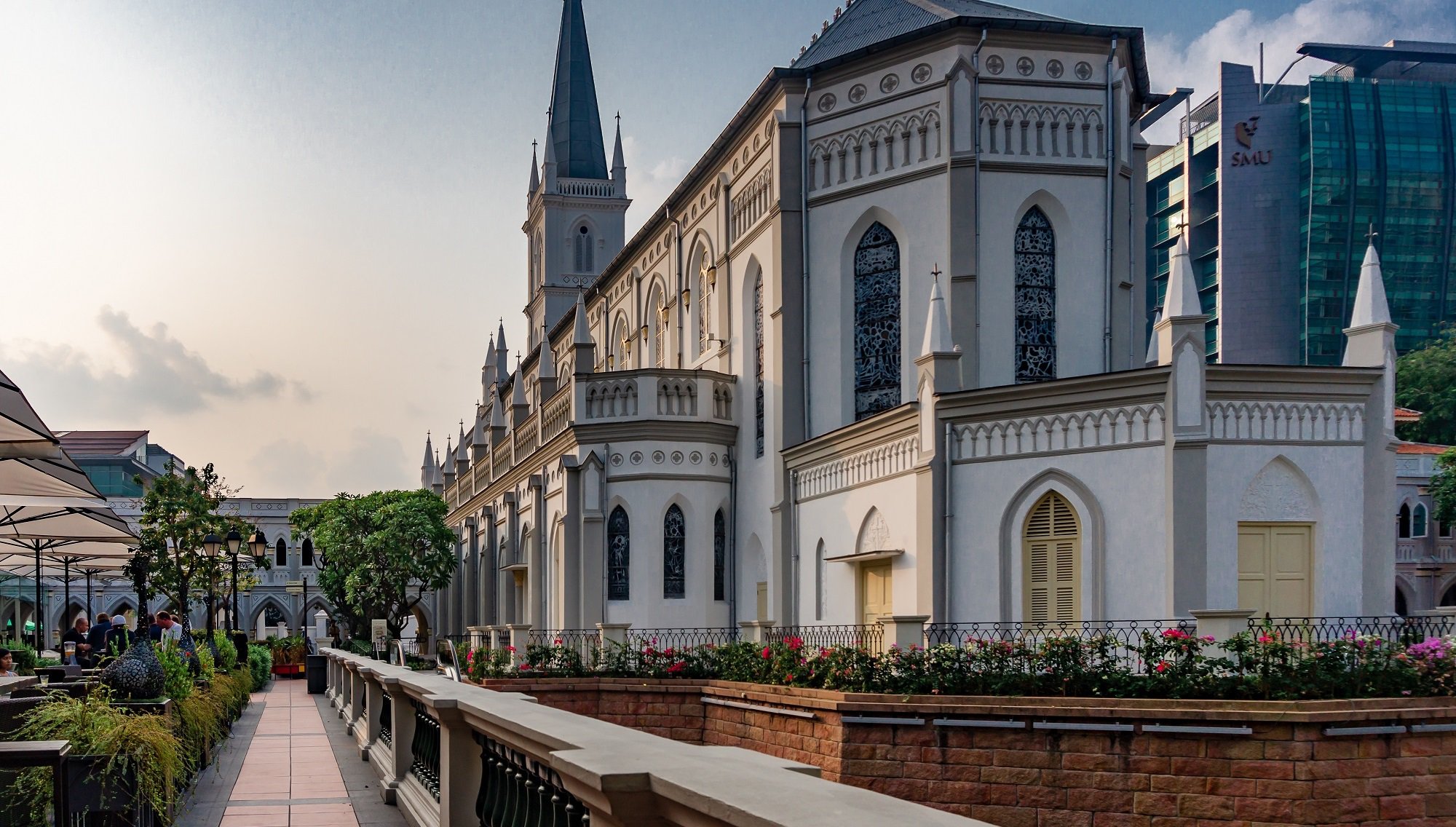
Churches as Community Centres – CHIJMES
The original complex was converted to a commercial area after a restoration project undertaken by our firm in 2013. The site boasts beautiful courtyards and cosy alfresco dining areas, while the main hall and alcove are perfect for exquisite weddings.
The original complex was converted to a commercial area after a restoration project undertaken by our firm in 2013. The site boasts beautiful courtyards and cosy alfresco dining areas, while the main hall and alcove are perfect for exquisite weddings.
Mosques for Multi-Cultural Activities – Al-Ansar Mosque, Singapore
The extension of the Al-Ansar Mosque celebrates the community’s emotional connection and bond with the space. It includes a new community plaza that serves multiple functions – as an informal gathering space, an extended place for worship, and a social event area. The upper floors house a 300-seat auditorium and function rooms. This place is a draw for those who live in the vicinity, both Muslims and non-Muslims alike.
The extension of the Al-Ansar Mosque celebrates the community’s emotional connection and bond with the space. It includes a new community plaza that serves multiple functions – as an informal gathering space, an extended place for worship, and a social event area. The upper floors house a 300-seat auditorium and function rooms. This place is a draw for those who live in the vicinity, both Muslims and non-Muslims alike.
Opening up access to sacred spaces requires a delicate approach. The religious authorities and the local communities can collaborate to make the space more accessible. Design interventions can include the incorporation of modern technology to create a secure environment. Clear guidelines for visitors will help maintain the sanctity of the space and ensure respectful behaviour. We can create flexible yet considerate multi-use spaces with thoughtful design measures. Landscaping and public plazas can help attract people to shape dynamic and pleasing spaces.
The future role of sacred spaces
The transition of sacred spaces into the public domain is a complex yet gratifying endeavour. This transition is a testament to our ability to strike a gentle balance between tradition and modernity. It involves not only physical modifications but also a deep understanding of the cultural, historical, and spiritual aspects attached to these places. We can create environments that foster unity, cultural appreciation and interfaith understanding. Ultimately, the process exemplifies the power of inclusive architecture to connect people.
As cities and communities continue to evolve, sacred spaces will remain relevant as places of meaning and connection. Future approaches may combine cultural heritage, contemporary design, and community needs in ways that keep these spaces both rooted and adaptable.