Trends
Gated Yet Integrated
May 22, 2026
Gated communities are no longer niche developments. Across many Asian cities, they have become a dominant residential model, spanning a wide range of income levels and urban contexts. Their growth reflects a rising desire for privacy, control, and predictability in everyday living. Yet this raises a broader question. If cities are becoming more connected, why do inward-looking communities continue to grow?
At a basic level, gated communities respond to real concerns. Safety and security remain key drivers, particularly in urban environments where infrastructure and public spaces vary significantly from one neighbourhood to another. They also represent aspiration. For many, they signal upward mobility and a more stable way of life.
The Tension Between Privacy and Urban Openness
However, this model introduces a clear tension. Gated communities offer comfort, but at the cost of openness. They create private environments that are curated yet sit within cities that are heterogeneous.
Internally, they promise connection through shared spaces. Externally, they establish boundaries that separate residents from the surrounding urban fabric. This creates a contradiction between controlled enclave living and the notion of a well-connected city.
At a basic level, gated communities respond to real concerns. Safety and security remain key drivers, particularly in urban environments where infrastructure and public spaces vary significantly from one neighbourhood to another. They also represent aspiration. For many, they signal upward mobility and a more stable way of life.
The Tension Between Privacy and Urban Openness
However, this model introduces a clear tension. Gated communities offer comfort, but at the cost of openness. They create private environments that are curated yet sit within cities that are heterogeneous.
Internally, they promise connection through shared spaces. Externally, they establish boundaries that separate residents from the surrounding urban fabric. This creates a contradiction between controlled enclave living and the notion of a well-connected city.
Despite these contradictions, gated communities continue to gain traction. Their appeal lies not only in what they offer, but in how they are positioned. At its core, the appeal is often framed through marketing narratives that prioritise emotions.
Security is often the entry point, but it is rarely communicated directly. Instead, the narrative shifts towards care and reassurance. Residents are not told they need protection, but that they deserve to feel secure and at ease. Fear is reframed as care, and risk as comfort.
These developments are also presented as complete lifestyle environments. Amenities are not simply listed but framed as part of a coherent daily routine. The emphasis is on offering an attractive, packaged lifestyle.
Taken together, these elements form a strategy built on aspiration and reassurance. They present a version of life that feels calmer and more complete. Without stating it directly, a contrast is created between what is inside and what is outside.
Security is often the entry point, but it is rarely communicated directly. Instead, the narrative shifts towards care and reassurance. Residents are not told they need protection, but that they deserve to feel secure and at ease. Fear is reframed as care, and risk as comfort.
These developments are also presented as complete lifestyle environments. Amenities are not simply listed but framed as part of a coherent daily routine. The emphasis is on offering an attractive, packaged lifestyle.
Taken together, these elements form a strategy built on aspiration and reassurance. They present a version of life that feels calmer and more complete. Without stating it directly, a contrast is created between what is inside and what is outside.
Gated Living as Mainstream Aspiration Across Asia Pacific
The strength of this model is particularly evident across the Asia Pacific region. Rapid urbanisation often results in uneven development and varying levels of infrastructure quality. In this context, gated communities provide a controlled alternative. These developments are also presented as complete lifestyle environments. Amenities are not simply listed but framed as part of a coherent daily routine. The emphasis is on offering an attractive, packaged lifestyle.
Community is similarly constructed. Rather than forming organically, it is defined upfront through terms such as family-friendly or like-minded. At the same time, home ownership is tied to one’s identity.
Buying into such developments signals stability and progress, positioning the home as both a living environment and a marker of personal advancement.
Cultural factors also play a role, with a strong emphasis on family, ownership, and long-term stability. In countries such as Malaysia, landed living within planned townships is often associated with aspiration and lifestyle progression.
The strength of this model is particularly evident across the Asia Pacific region. Rapid urbanisation often results in uneven development and varying levels of infrastructure quality. In this context, gated communities provide a controlled alternative. These developments are also presented as complete lifestyle environments. Amenities are not simply listed but framed as part of a coherent daily routine. The emphasis is on offering an attractive, packaged lifestyle.
Community is similarly constructed. Rather than forming organically, it is defined upfront through terms such as family-friendly or like-minded. At the same time, home ownership is tied to one’s identity.
Buying into such developments signals stability and progress, positioning the home as both a living environment and a marker of personal advancement.
Cultural factors also play a role, with a strong emphasis on family, ownership, and long-term stability. In countries such as Malaysia, landed living within planned townships is often associated with aspiration and lifestyle progression.
In more land-constrained environments such as Singapore, similar ideas are translated into high-density residential developments with controlled access and shared amenities. Across the region, gated living has become part of mainstream housing aspiration.
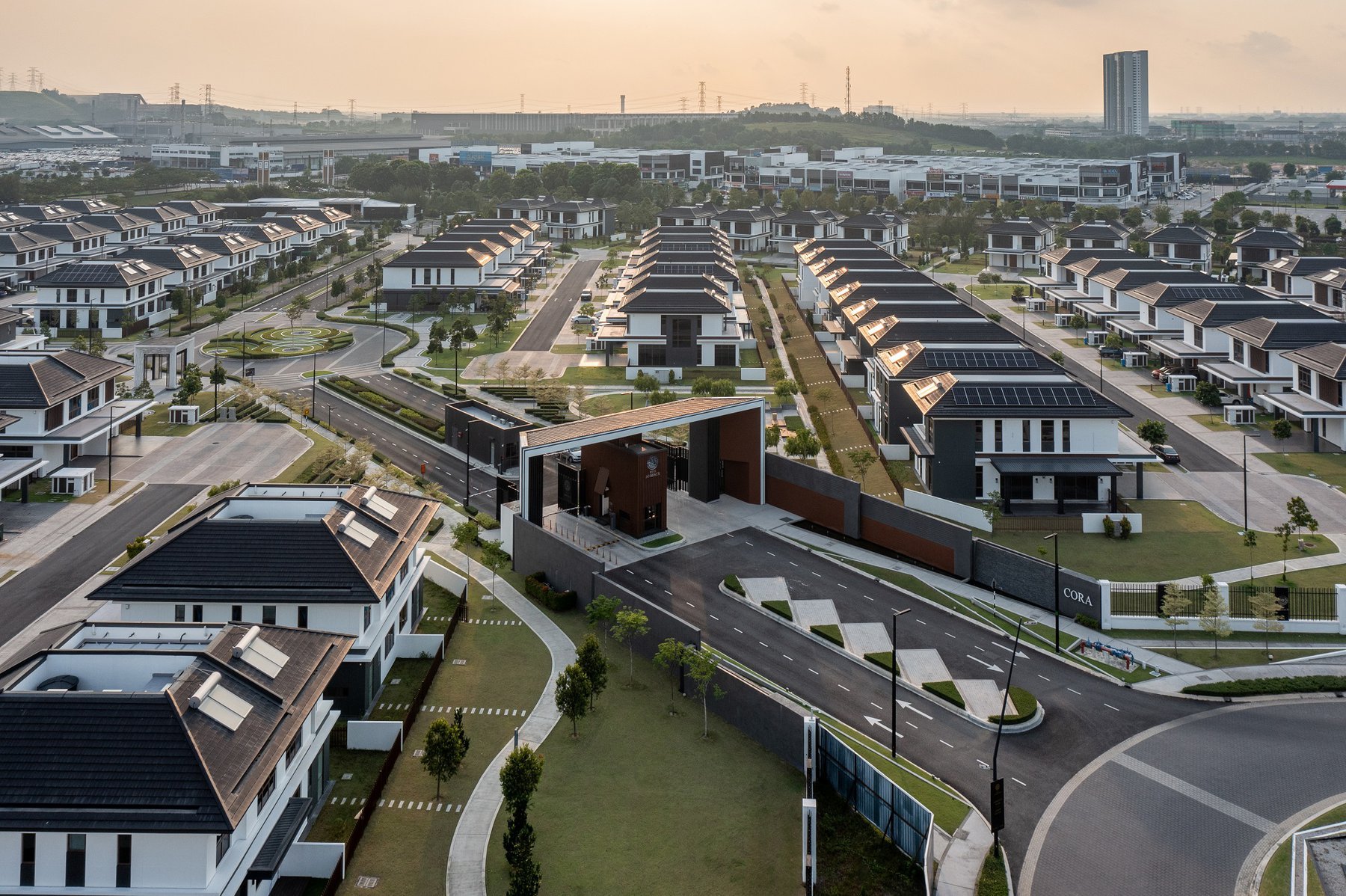
A more integrated gated environment often depends on how edges, access points, street interfaces, landscaping, and shared amenities are designed. These elements can influence whether a development feels closed off and inward looking, or connected more thoughtfully to its surroundings.
Residential Typologies and Patterns of Interaction
Different residential typologies further shape how people live and interact. Cluster housing, with its low-rise format and shared internal streets, can encourage neighbourly interaction while maintaining privacy. In contrast, condominium developments organise living vertically, with interaction centred around shared facilities. These are not just variations in form but influence how residents engage with one another and with the wider city.
At the same time, the model is beginning to shift. Newer developments are exploring hybrid approaches that soften traditional boundaries through gentler transitions and public-facing amenities.
A more integrated gated environment often depends on how edges, access points, street interfaces, landscaping, and shared amenities are designed. These elements can influence whether a development feels closed off and inward looking, or connected more thoughtfully to its surroundings.
Residential Typologies and Patterns of Interaction
Different residential typologies further shape how people live and interact. Cluster housing, with its low-rise format and shared internal streets, can encourage neighbourly interaction while maintaining privacy. In contrast, condominium developments organise living vertically, with interaction centred around shared facilities. These are not just variations in form but influence how residents engage with one another and with the wider city.
At the same time, the model is beginning to shift. Newer developments are exploring hybrid approaches that soften traditional boundaries through gentler transitions and public-facing amenities.
In townships such as Desa ParkCity in Kuala Lumpur, individual residential clusters remain gated and managed, while the wider masterplan is designed to be more open and accessible.
Public spaces such as Central Park and The Waterfront welcome both residents and visitors, encouraging everyday activity and shared use. This creates an environment that feels more connected and community-oriented, rather than limited only to those who live within it.
The Future of Gated Communities: Reconnection Over Exclusion
The question is not whether gated communities should exist, but t behaves within the larger urban fabric. Projects that balance protection with openness can create environments that feel secure while still contributing positively to the life of the city, and their continued relevance will depend not on how effectively they exclude, but on how thoughtfully they reconnect with the neighbourhoods around them.
Image CR: Desa ParkCity
Public spaces such as Central Park and The Waterfront welcome both residents and visitors, encouraging everyday activity and shared use. This creates an environment that feels more connected and community-oriented, rather than limited only to those who live within it.
The Future of Gated Communities: Reconnection Over Exclusion
The question is not whether gated communities should exist, but t behaves within the larger urban fabric. Projects that balance protection with openness can create environments that feel secure while still contributing positively to the life of the city, and their continued relevance will depend not on how effectively they exclude, but on how thoughtfully they reconnect with the neighbourhoods around them.
Image CR: Desa ParkCity